The Same Method Every Time
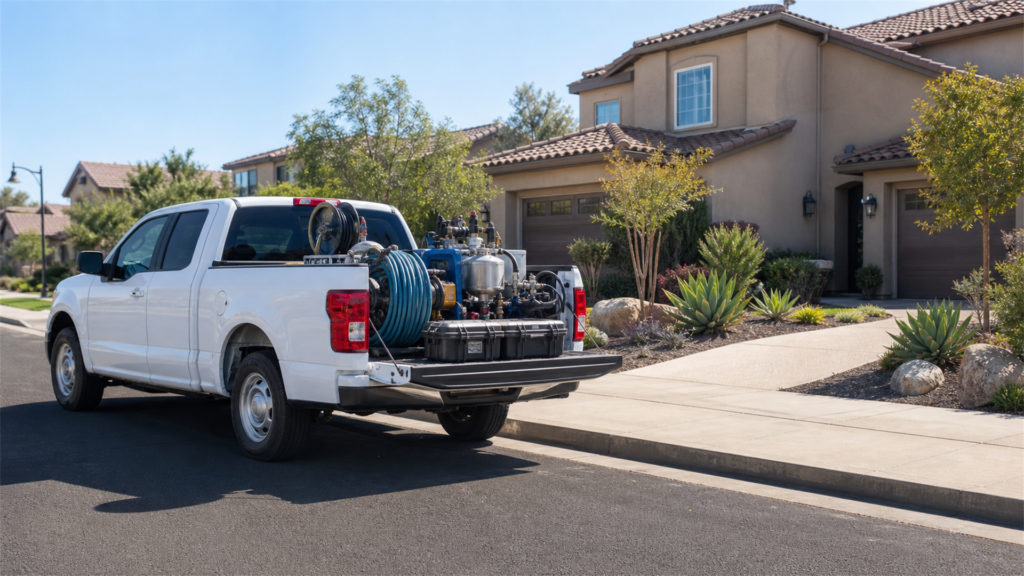
Every pool we clean gets the same method: compressed-air media blasting, calibrated to the tile or stone on your pool. No acid. No pumice stones. No full drain.
The steps below cover what happens from your first estimate through the finished job. They are the same whether you have one backyard pool in Pacific Beach or a ten-property HOA portfolio in Rancho Bernardo.
Step 1
Send a few photos of your pool tile through the online estimate form. We can usually identify the tile type and the buildup level from photos alone.
You get a real number before anyone visits your property. No obligation once you have it.
Step 2
Once you approve the estimate, we schedule around your calendar. For HOA, commercial and hospitality properties, we build around guest access windows and business hours rather than a fixed slot.
Most residential pools are done in four to eight hours, depending on pool size and how much buildup has formed.
Step 3
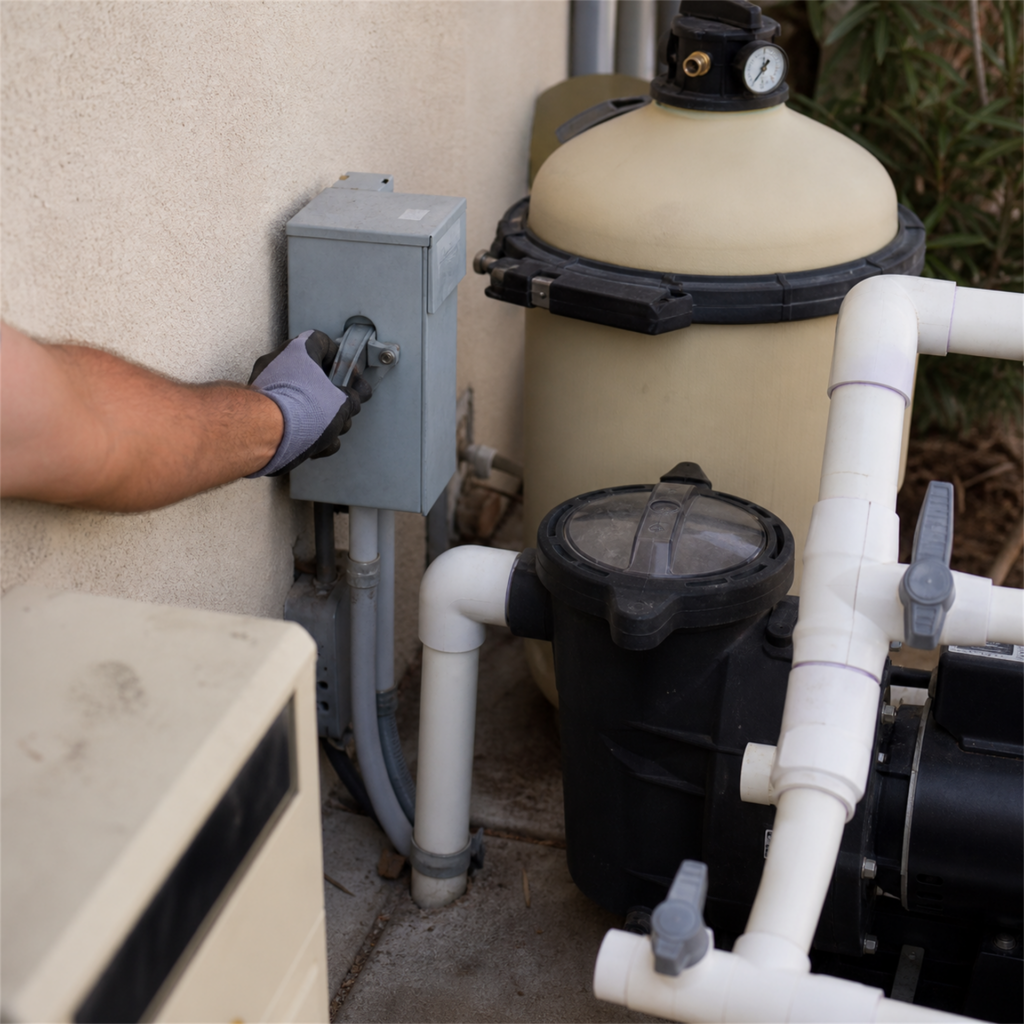
Before anything else, we put your pool equipment into service mode. That keeps the pumps from cycling back on while the water is down, protecting the pump and the heater from running dry.
We lower the water to the waterline, the band where the tile sits, and stop there. Your pool is never fully drained. A fully emptied shell can crack, lift, or damage a liner depending on the pool type.
Step 4
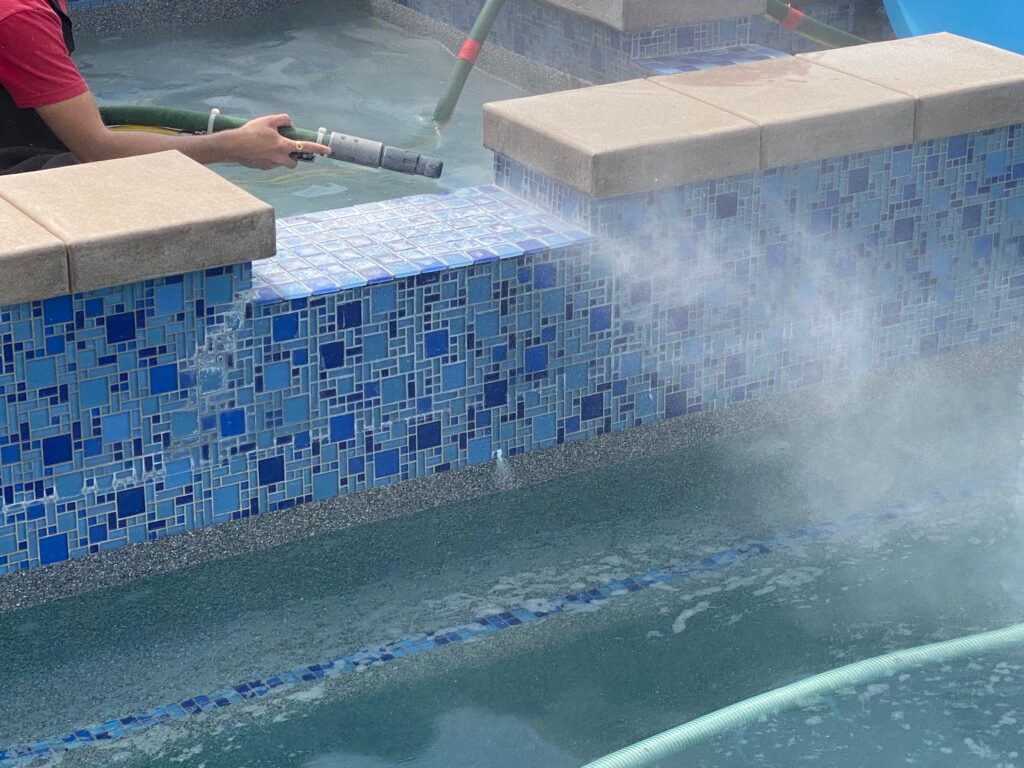
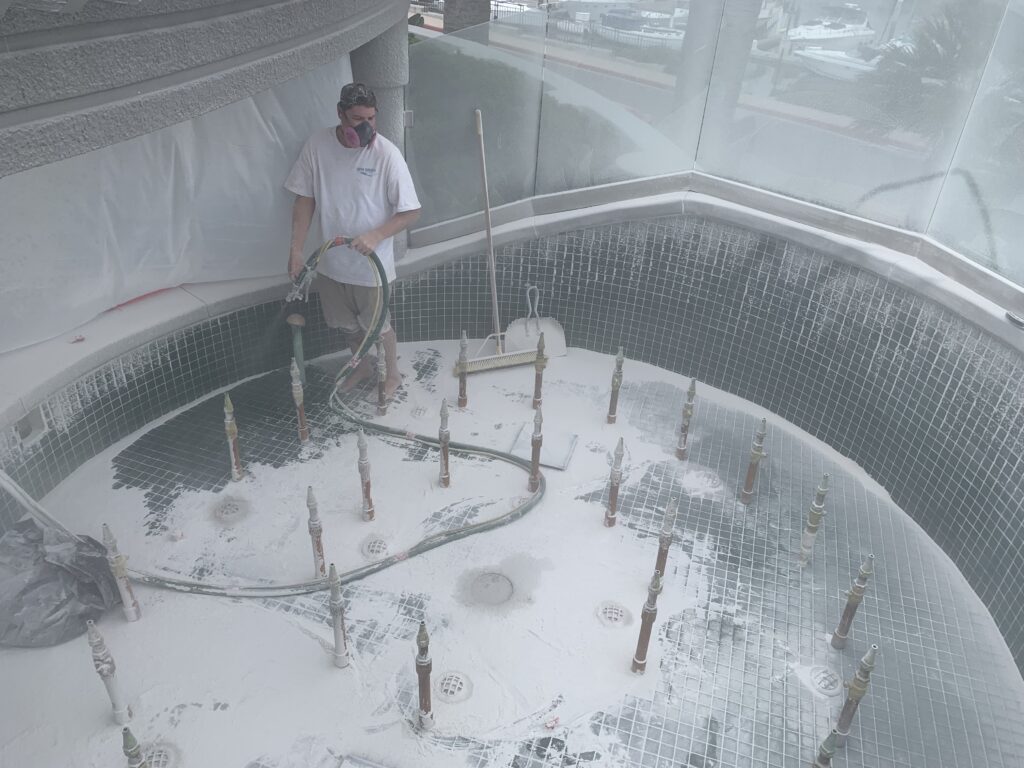
Compressed air drives a fine media against the tile at low pressure, lifting calcium and scale off physically. No chemicals involved and no change to your water.
We blast the full waterline perimeter in one pass, including coping and any adjacent stone. The crew moves your patio furniture, planters and anything else near the pool before starting, and tapes off the return lines so nothing works its way into your plumbing.
Same equipment, calibrated to each surface.
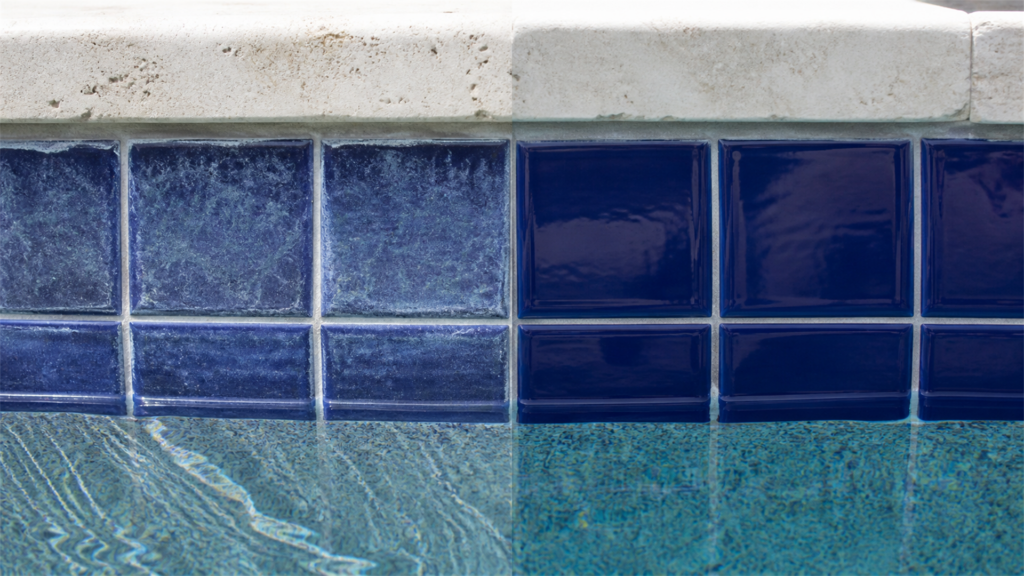
Finest media, lowest pressure. Glass shows every scratch permanently, so this surface gets the gentlest pass we run.
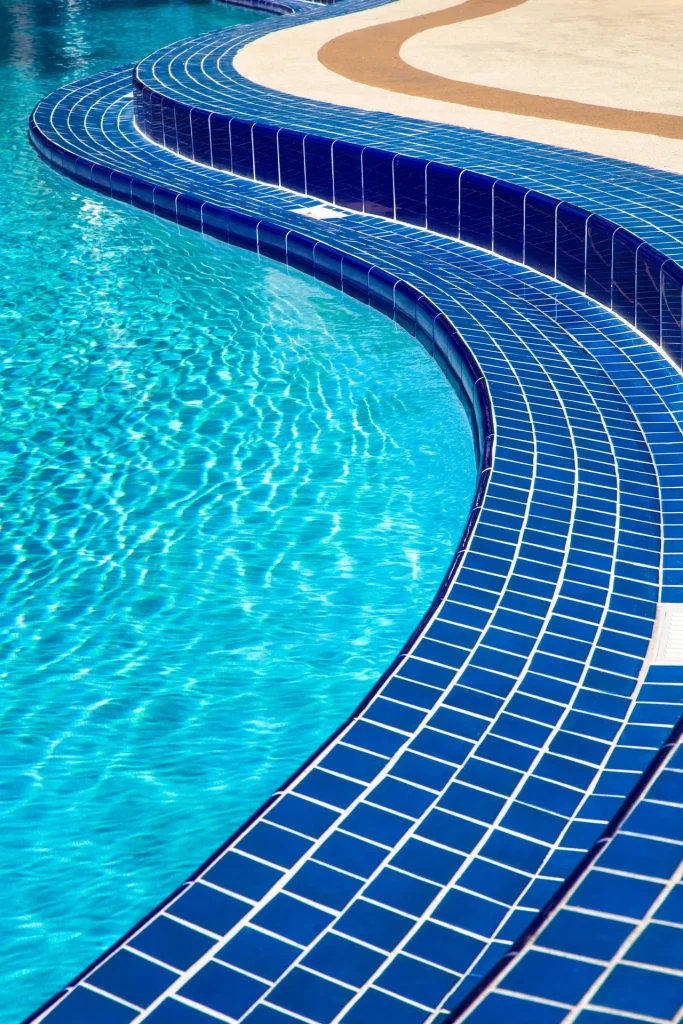
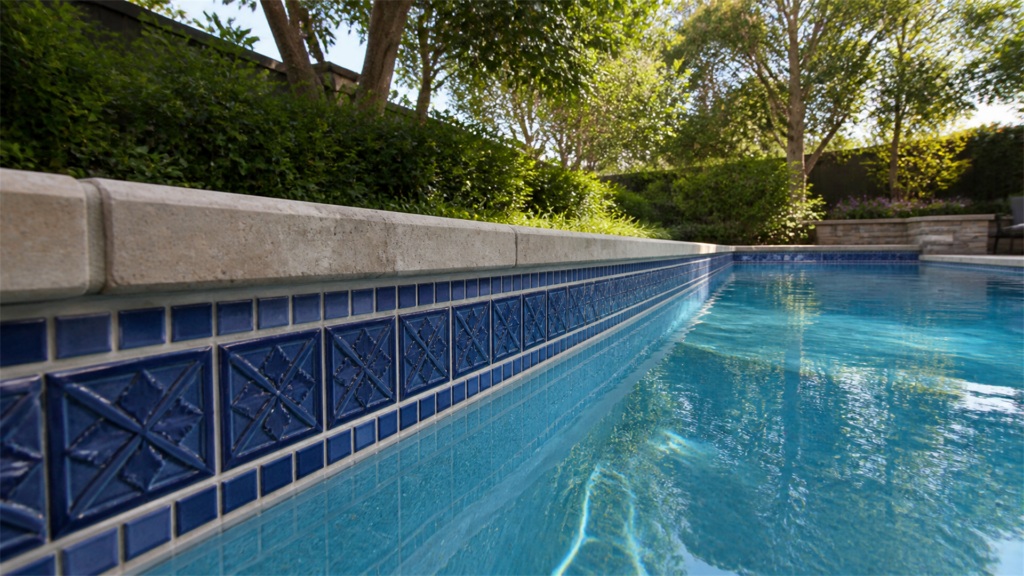
Matched to the glaze. Textured sections and grout lines are cleaned in the same pass, not treated as separate jobs.
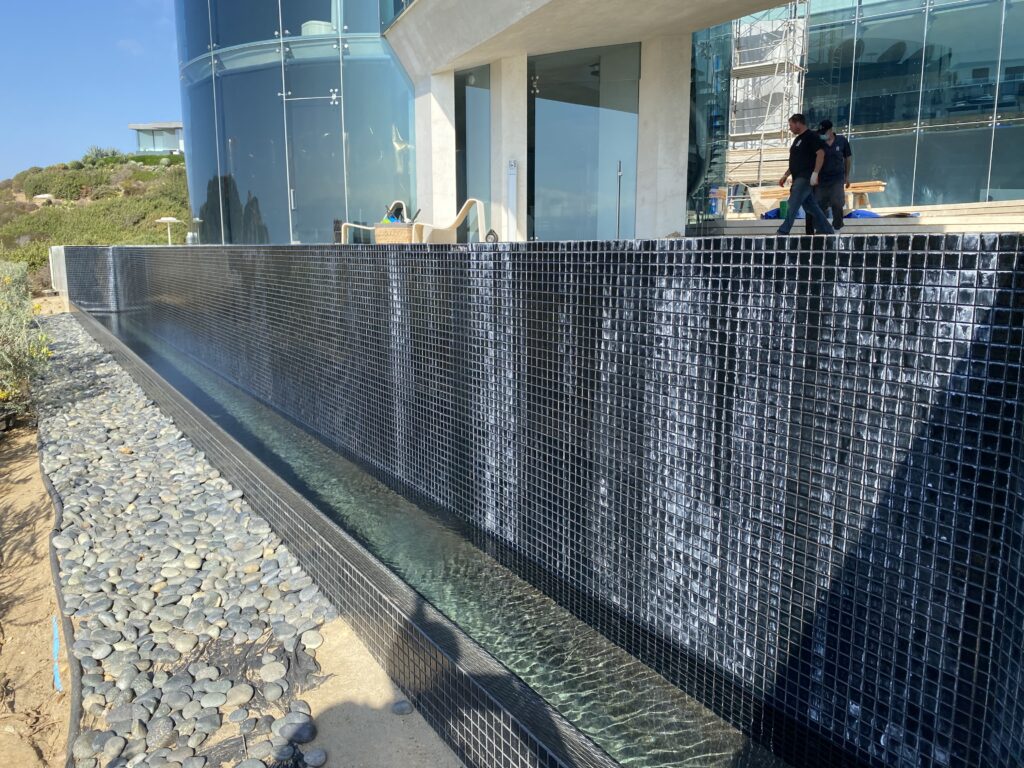
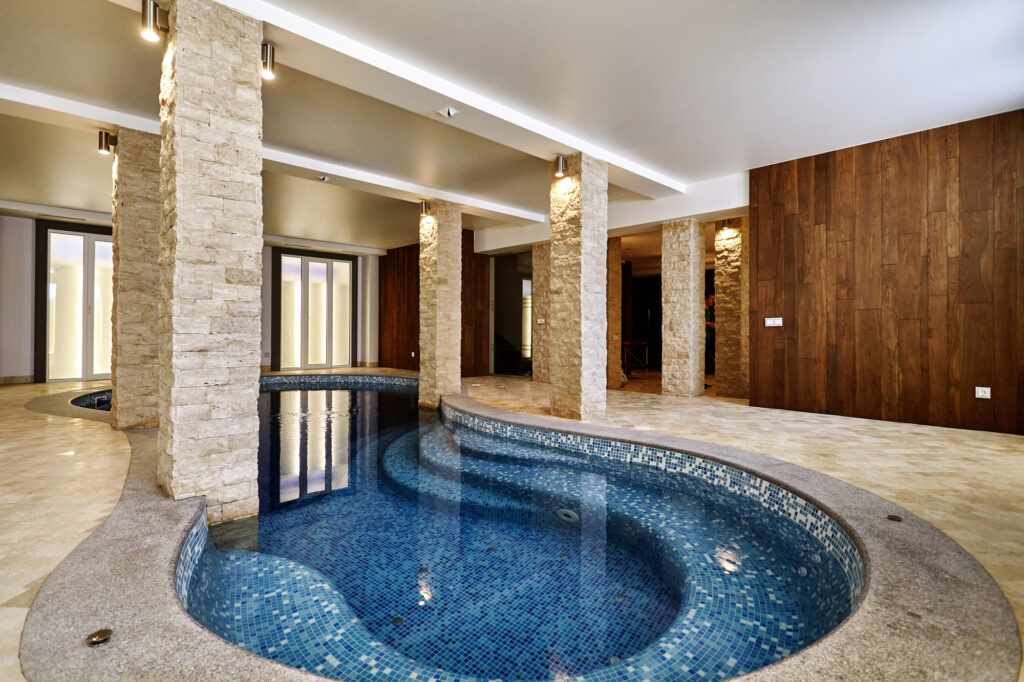
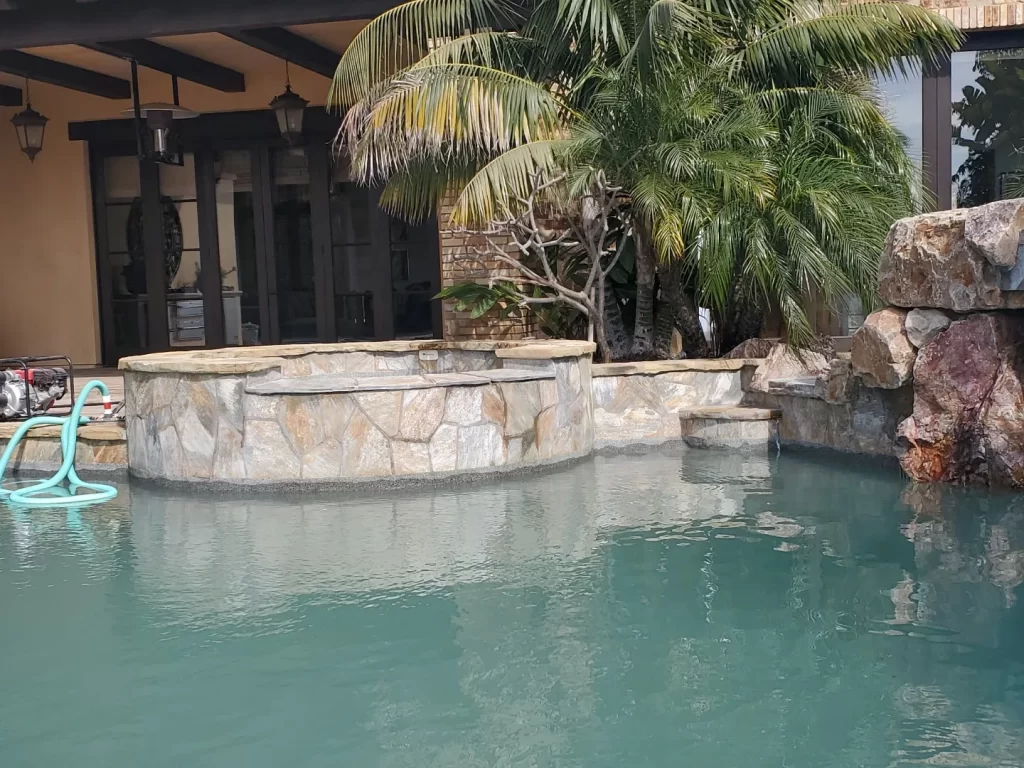
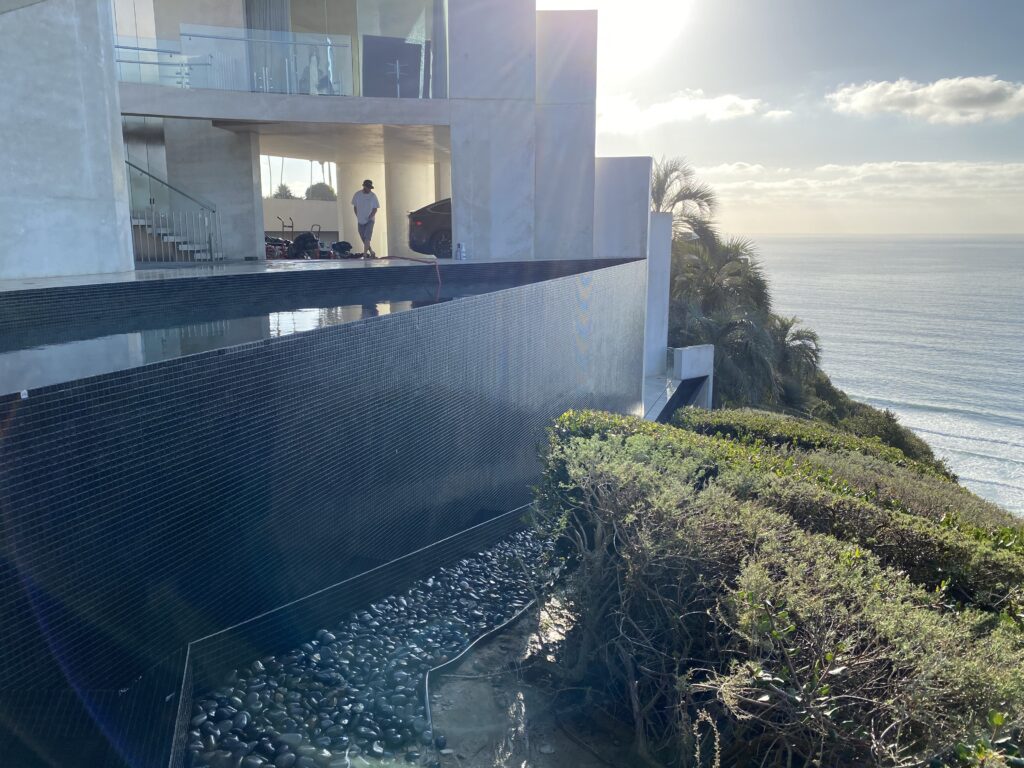
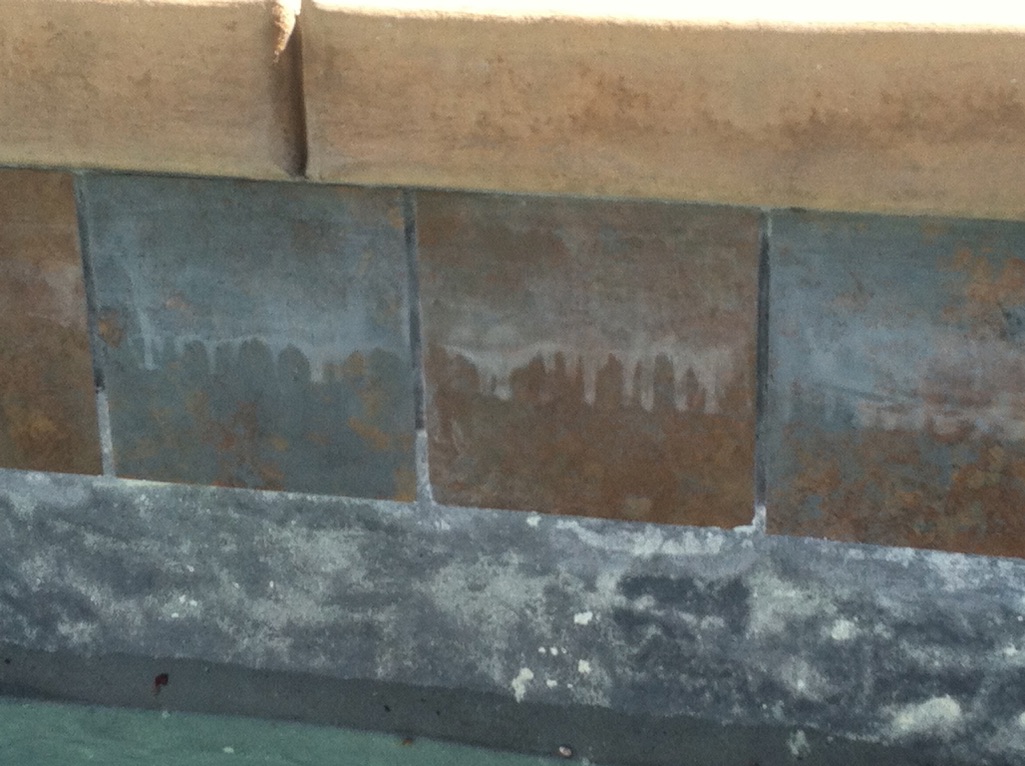
Cut stone, flagstone and stacked stone. Pressure set to the porosity of the stone so nothing etches or discolors.
Step 5
We wash down the work area, then vacuum the spent media and calcium debris out of the pool with our own equipment. Nothing is left for your filter to handle.
Your furniture and planters go back where they were.
Step 6
Every cleaning ends with a walkthrough: what we found, how we treated each section, and a maintenance recommendation starting with holding your pH between 7.2 and 7.6.
We do not consider a job finished until the tile is fully restored. On the heaviest inland buildup, in Escondido or El Cajon, that can mean going back over a section a second time.
Four to eight hours for most residential pools, start to finish.
Your pool can be back in use within 24 hours.
What We Never Do
Acid washing dissolves calcium carbonate chemically, but it strips the finish off natural stone, hazes glass, changes your water chemistry, and does almost nothing to calcium silicate, the harder buildup that forms over several seasons.
Pumice stones grind calcium off by abrasion and take a layer of the tile with it. On glass that leaves permanent scratching and a haze that gets worse every time it is used again.
Media blasting lifts calcium off physically. No chemicals, no grinding, no effect on your water. It handles both calcium carbonate and calcium silicate.

Before You Book
Media blasting removes what sits on top of your tile. It does not repair the tile underneath. If a previous cleaning etched your stone with acid or scratched your glass with pumice, that damage is in the surface and no method reverses it.
Tile held on only by aging grout can come loose during any cleaning. We tell you that at the estimate, not after the crew is on site.
How Often
Every 12 to 18 months for most San Diego County pools. The City of San Diego’s annual water quality report puts treatment plant hardness at 216 to 230 parts per million, which the USGS classifies as very hard. Every time the water level moves, it leaves a trace of that mineral on your tile.
Coastal pools with salt air exposure and inland pools that run warm past September both sit at the shorter end of that range. We give you a specific recommendation after the first cleaning.
Send a few photos and we will tell you what your tile needs, what it will cost, and how long it will take.